
Introduction
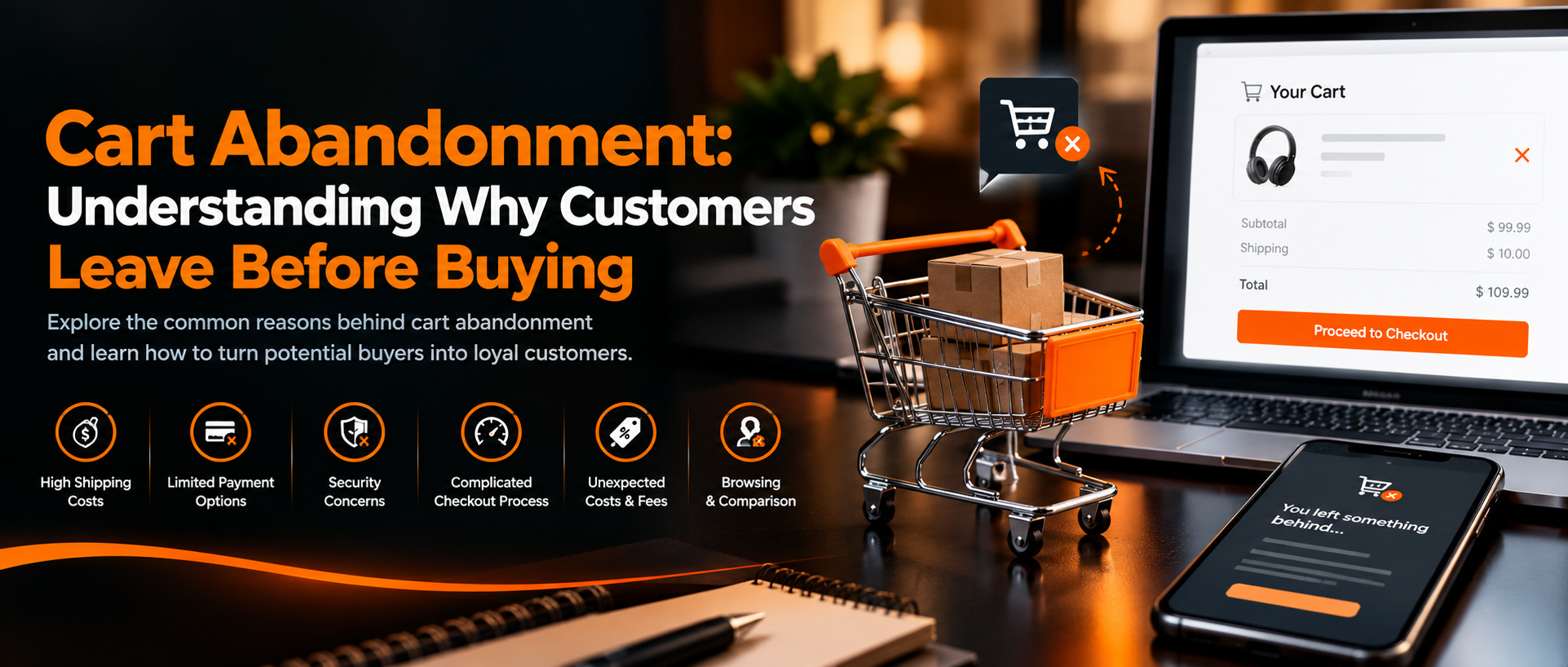
Cart abandonment is one of the most common challenges faced by Shopify store owners. It occurs when customers add products to their shopping carts but leave the website without completing their purchases. Even when an online store attracts visitors and generates product interest, unexpected costs, complicated checkout processes, and a lack of trust can prevent customers from placing orders.
Understanding why customers abandon their carts helps businesses identify problems in the shopping journey and develop effective strategies to recover lost sales. With the right combination of user-friendly store design, transparent pricing, convenient checkout options, and timely follow-ups, Shopify businesses can improve conversion rates and create a smoother shopping experience.
For professional support with Shopify store design and digital marketing, explore https://merchhook.com/#services.
What Is Cart Abandonment?
Cart abandonment happens when a shopper selects one or more products, adds them to the cart, and exits the store before completing the checkout process. It can happen for several reasons, including unexpected shipping charges, limited payment options, slow website performance, or distractions during shopping.
For Shopify store owners, abandoned carts represent potential customers who have already shown interest in their products. Analyzing their behavior can reveal opportunities to improve the store and encourage more visitors to complete their purchases.
Common Reasons Customers Abandon Their Carts
1. Unexpected Additional Costs
Unexpected shipping fees, taxes, and other charges can discourage customers at checkout. Displaying shipping information and applicable costs as early as possible helps customers make informed decisions.
2. Complicated Checkout Process
A checkout process that requires too many steps or unnecessary information can frustrate shoppers. Simplifying forms, reducing unnecessary fields, and offering guest checkout where appropriate can make purchasing easier.
3. Limited Payment Options
Customers may leave when their preferred payment method is unavailable. Offering suitable and trusted payment options for the target market can help reduce this barrier.
4. Website Performance Issues
Slow-loading pages, broken buttons, and checkout errors can interrupt the buying journey. Regular testing across desktop and mobile devices helps identify technical problems that may prevent customers from completing orders.
5. Lack of Trust
Customers may hesitate if product details are incomplete, return policies are unclear, or contact information is difficult to find. Clear policies, authentic reviews, secure checkout, and accessible customer support can increase confidence.
6. Distractions and Comparison Shopping
Some shoppers add products to their carts while comparing prices or exploring other stores. Others simply become distracted and forget to return. Helpful reminders and relevant offers may encourage these customers to complete their purchases.
How Shopify Store Design Can Reduce Cart Abandonment
Create a Clear Shopping Journey
A well-structured Shopify store should make it easy for customers to move from product discovery to checkout. Clear navigation, organized categories, visible calls to action, and a simple cart interface reduce confusion.
Optimize the Mobile Shopping Experience
Many customers browse and shop using smartphones. Responsive layouts, readable text, easy-to-tap buttons, and mobile-friendly checkout experiences help prevent unnecessary friction.
Display Product Information Clearly
Include accurate descriptions, high-quality product images, sizing information where relevant, delivery details, and return policies. Customers who understand what they are buying are better equipped to make confident decisions.
Make Checkout Simple and Transparent
Keep checkout steps easy to follow and display the total cost before customers finalize their purchases. Avoid unnecessary distractions and ensure that customers can correct order details without difficulty.
Businesses can explore Shopify store design and related digital marketing services at https://merchhook.com/#services.
Effective Cart Recovery Strategies
1. Send Abandoned Cart Reminders
A timely reminder can help customers return to products they left behind. Keep messages friendly, include relevant product details, and provide a direct route back to the cart when supported by the platform and customer consent.
2. Offer Relevant Incentives
A limited discount, free-shipping offer, or suitable bundle may encourage customers to complete a purchase. However, incentives should be used strategically to protect profit margins and avoid training customers to wait for discounts.
3. Use Retargeting Campaigns
With appropriate consent and privacy settings, retargeting campaigns can reconnect with shoppers who previously visited a store or showed interest in specific products. Relevant ads can remind customers of products they considered.
4. Improve Customer Support
Make it easy for customers to ask questions about delivery, returns, sizing, or payment options. Quick and helpful support can resolve concerns that might otherwise prevent a purchase.
5. Analyze Checkout Data
Review available Shopify analytics and checkout reports to identify where customers leave the buying process. If abandonment increases at a particular step, investigate possible causes such as unexpected fees, technical errors, or confusing instructions.
Measuring Conversion Recovery
Businesses should track relevant metrics to understand whether their cart recovery efforts are working. Useful measures include:
- Cart abandonment rate: The proportion of shopping carts that do not result in completed purchases, based on a consistent measurement method.
- Checkout completion rate: The percentage of checkout processes that result in completed orders.
- Recovered sales: Revenue generated from customers who return and purchase after a recovery message or campaign.
- Average order value: The average revenue earned per completed order.
- Recovery campaign performance: Email clicks, conversions, and revenue attributed to abandoned-cart communications.
Monitor these indicators over time and compare campaigns to determine which improvements provide meaningful results.
Common Cart Recovery Mistakes to Avoid
Avoid sending excessive reminders that frustrate customers. Do not use misleading discounts, hide additional costs, or make unsupported claims about product availability. Ensure that recovery messages follow applicable privacy requirements and that customers can manage their marketing preferences.
Businesses should also avoid relying entirely on reminders to solve abandonment. Improving the underlying store experience is essential because repeated checkout problems can continue to affect conversions even when recovery campaigns are active.
For help improving Shopify store performance and digital marketing, visit https://merchhook.com/#services.
Frequently Asked Questions
1. Why do customers abandon their Shopify shopping carts?
Customers may abandon carts because of unexpected costs, complicated checkout steps, limited payment options, website errors, unclear policies, or distractions while shopping.
2. How can Shopify store owners recover abandoned carts?
Store owners can use abandoned-cart reminders, relevant incentives, retargeting campaigns, better customer support, and checkout improvements. The most effective approach depends on customer behavior and the reasons behind abandonment.
Conclusion
Cart abandonment can affect Shopify sales, but understanding customer behavior helps businesses identify and address the barriers that prevent purchases. Transparent pricing, faster pages, mobile-friendly design, simple checkout, and effective recovery campaigns can make the buying process more convenient.
By combining thoughtful Shopify store design with data-driven conversion recovery strategies, businesses can encourage more customers to complete their purchases and improve the overall shopping experience.
Visit Website
Explore Shopify store design, Google Business Profile optimization, and digital marketing services at https://merchhook.com/#services.